
Logistics AI: What it is, Use Cases, Key Benefits
What Is Logistics AI?
Logistics AI refers to artificial intelligence technologies applied to logistics operations — the movement, storage, and management of goods across supply chains. It encompasses a broad range of tools and applications, from machine learning models that predict shipment delays to AI writing assistants that draft carrier communications.
The term is broad by design. "Logistics AI" can refer to route optimization algorithms, demand forecasting models, warehouse automation systems, natural language AI assistants for freight professionals, or predictive analytics platforms for fleet management. What unites them is the application of machine learning, natural language processing, or other AI techniques to improve the speed, accuracy, or efficiency of logistics work.
For logistics professionals evaluating AI tools, the most important distinction is between AI that automates physical or quantitative processes (route optimization, load planning, demand forecasting) and AI that assists with knowledge work (writing carrier communications, analyzing rate data, producing operations reports). Both categories are growing rapidly, but they solve fundamentally different problems and require different evaluation criteria.
The Main Categories of Logistics AI
Logistics AI tools generally fall into five functional categories. Understanding which category a tool belongs to is the first step in evaluating whether it addresses your actual operational problems.
1. Route Optimization & Fleet Intelligence
AI systems that determine optimal delivery routes, minimize fuel consumption, and adapt in real time to traffic, weather, and road conditions. These tools have been in logistics for over a decade and represent some of the most mature AI applications in the industry.
2. Demand Forecasting & Inventory Planning
Machine learning models that analyze historical sales data, seasonal patterns, and external signals to predict future demand and optimize inventory positioning. These tools directly affect carrying costs, stockout rates, and working capital efficiency.
3. Warehouse Automation & Robotics
AI-driven robotics, autonomous mobile robots (AMRs), and vision systems used in distribution centers to automate picking, sorting, and inventory management. Major deployments at Amazon, DHL, and FedEx have demonstrated significant throughput improvements.
4. Predictive Analytics & Risk Management
AI models that predict shipment delays, equipment failures, carrier performance degradation, and supply chain disruption risks. These tools allow logistics teams to shift from reactive exception management to proactive risk mitigation.
5. AI Writing & Knowledge Work Assistants
Natural language AI tools that help logistics professionals draft carrier communications, analyze rate data, produce operations reports, and handle the documentation-intensive work of freight management. This is the fastest-growing category for day-to-day logistics professionals.
Where Logistics AI Is Delivering Measurable Value in 2025
Despite significant investment in logistics AI, value delivery remains concentrated in specific use cases. The most consistent ROI in 2025 comes from the following categories.
- Last-mile route optimization: Mature technology with well-documented fuel and time savings.
- Carrier communications & documentation: AI writing assistants are delivering measurable time savings for freight brokers, 3PLs, and logistics coordinators who produce high volumes of carrier and shipper communications daily.
- Demand forecasting: ML-based forecasting consistently outperforms traditional statistical models for most SKU-level inventory planning.
- Freight rate benchmarking: AI tools that analyze market rate data and flag above-market carrier costs are delivering measurable negotiation leverage for procurement teams.
- Operations reporting: AI tools that transform raw KPI data into structured executive reports are reducing reporting cycle times from hours to minutes.
How Logistics AI Affects Different Roles
Freight Brokers & 3PL Operations
AI writing assistants are the highest-impact logistics AI tool for freight brokers and 3PL teams today. Drafting carrier capacity requests, shipper updates, service failure responses, and margin reports is time-intensive, high-frequency work — exactly where AI assistants deliver the most measurable daily time savings.
Logistics Operations Managers
Operations managers benefit most from AI-assisted exception management, predictive analytics for carrier performance, and automated KPI reporting. AI tools that surface anomalies and generate structured exception reports reduce the manual work of monitoring large carrier networks.
Procurement & Sourcing Teams
AI is reshaping freight procurement through rate benchmarking tools, automated RFQ processing, and supplier performance analytics. Procurement teams with AI-assisted rate analysis consistently report stronger negotiating positions and faster sourcing cycles.
Logistics Analysts
Data summarization, report generation, and trend analysis are all areas where AI assistants reduce the manual work of logistics analytics — shifting time from formatting and writing to interpretation and recommendation.
How to Evaluate a Logistics AI Tool
- Specificity vs. breadth: A tool built specifically for logistics workflows will outperform a general-purpose tool on logistics tasks.
- Time to value: Tools that require extensive configuration or prompt engineering before delivering value have a real hidden cost.
- Output quality without coaching: The best logistics AI tools produce professional-grade output without requiring you to explain industry context in every session.
- Integration requirements: Some AI tools require TMS, ERP, or WMS integration. Others work as standalone tools.
- Measurable ROI metric: Define the metric before deployment — time saved per user per week, error rate reduction, carrier negotiation outcomes.
How briefli Can Help
Logistics professionals deal with a specific set of AI-solvable problems every day: high-volume carrier communications, rate analysis, document processing, and operations reporting. The briefli product suite addresses all of these across three purpose-built tools.
briefliChat (AI Assistant)
briefli's core AI assistant is purpose-built for logistics and supply chain professionals. Ask it to draft carrier communications, analyze rate proposals, summarize shipment exceptions, or produce operations reports — and it responds with freight-accurate output that meets professional standards without requiring you to explain industry context. No integration, no setup, productive from the first session.
briefliSideKick (Email Assistant for Microsoft)
briefliSideKick brings AI-powered email assistance directly into Microsoft Outlook. For logistics professionals who manage high volumes of carrier and shipper correspondence, SideKick drafts, refines, and replies to emails without leaving the inbox. It understands freight and supply chain communication context, making it the fastest way to reduce the daily email burden for any logistics team running on Microsoft 365.
BriefliDocs (Intelligent Document Processing)
briefliDoc is our IDP (Intelligent Document Processing) solution, built for the document-intensive workflows of logistics and supply chain operations. It extracts, classifies, and processes structured data from bills of lading, carrier contracts, rate confirmations, purchase orders, and compliance documents — reducing manual data entry, improving accuracy, and accelerating document-driven workflows across the operation.
Frequently Asked Questions About Logistics AI
Is logistics AI only for large enterprises?
No. While large-scale warehouse robotics and enterprise AI platforms require significant capital, AI writing assistants and analytics tools are accessible to logistics teams of any size — including independent freight brokers and small 3PLs.
Will AI replace logistics jobs?
AI is automating specific tasks within logistics roles — repetitive documentation, route calculation, exception detection. It is not replacing the judgment, relationship management, and operational decision-making that define most logistics professional roles. The more accurate framing: AI is changing what logistics professionals spend their time on, not eliminating the need for them.
What's the difference between logistics AI and supply chain AI?
Logistics AI typically refers to tools focused on the movement and delivery of goods. Supply chain AI is a broader term that encompasses procurement, inventory planning, and supplier management alongside logistics execution.
How do I start with logistics AI if I'm a small team?
Start with the highest-frequency, most time-intensive task your team performs manually. For most freight brokers and 3PLs, that's carrier communications and status reporting. A knowledge work AI assistant costs little, requires no integration, and delivers time savings immediately.
Keep learning
AI for Customs Brokerage: Applications, Benefits, and What to Evaluate

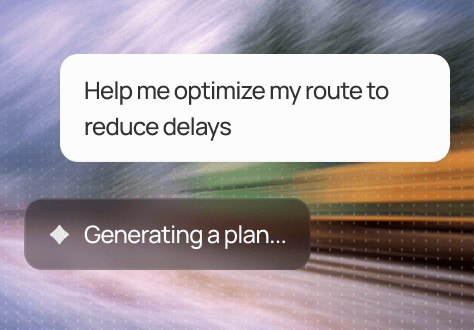
AI for Route Optimization: How AI Is Improving Delivery Performance and Reducing Costs
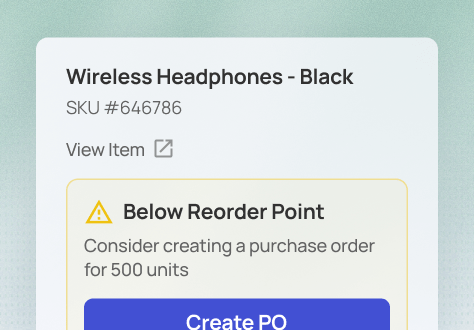
AI for Purchasing: How AI Is Changing the Way Teams Buy
.png)