
AI for Logistics Managers: How to Use AI to Run a More Efficient Operation
What AI Is Actually Doing for Logistics Managers
Logistics managers are responsible for keeping freight moving, carriers performing, and operations costs under control — while communicating the status of all of it to shippers, leadership, and the rest of the business. AI is not changing what logistics managers are responsible for. It is changing how much of their time gets consumed by the administrative and communication work that surrounds those responsibilities.
The logistics managers getting the most value from AI in 2025 are the ones who have identified their highest-frequency administrative tasks and deployed AI tools against them. For most logistics managers, those tasks are carrier communications, exception reporting, and performance reviews. For operations-focused managers, they also include route optimization support and carrier network analytics.
AI Applications That Matter Most for Logistics Managers
Carrier Performance Communications
Logistics managers maintain ongoing performance dialogue with carrier networks — SLA notices, escalation letters, corrective action requests, and quarterly business review summaries. AI writing assistants that understand freight-specific communication standards produce these communications faster and more consistently than manual drafting, without sacrificing the professional precision that carrier relationships require.
Shipment Exception Management
Managing shipment exceptions — late deliveries, damaged freight, capacity failures — is a daily function for logistics managers. AI tools that help draft exception notifications, customer communications, and internal escalations reduce the time between exception identification and stakeholder notification — which matters both for relationships and for downstream problem resolution.
Operations and KPI Reporting
Producing weekly operations reports, monthly KPI summaries, and quarterly carrier scorecards is a significant time investment for logistics managers. AI tools that transform raw performance data into structured, formatted reports with narrative commentary reduce this cycle from hours to minutes.
Route Optimization and Fleet Intelligence
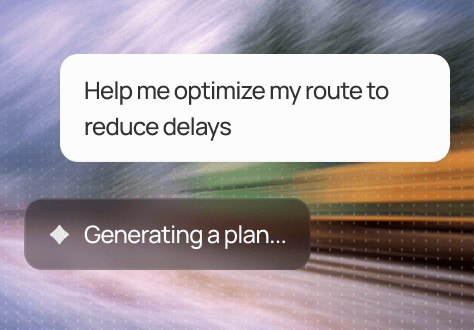
AI-powered route optimization is mature technology that most mid-to-large carriers and 3PLs have deployed in some form. For logistics managers who haven't yet adopted it, AI routing tools deliver documented fuel and time savings. For those who have, the opportunity is in AI-assisted continuous optimization rather than initial deployment.
Carrier Sourcing and Rate Analysis
AI tools that analyze lane-level carrier rate data, compare rates against market benchmarks, and flag above-market costs give logistics managers better negotiation leverage in carrier sourcing conversations and annual contract renewals.
Vendor and Customer Communications
Logistics managers also communicate extensively with shippers, vendors, and internal stakeholders. AI writing assistants that handle shipper updates, service failure notifications, and performance summary communications reduce the total communication burden for logistics management teams.
How AI Is Reshaping the Logistics Manager Role
The most significant shift AI is creating for logistics managers is a reallocation of time — from writing and compiling toward analyzing and deciding. Logistics managers who adopt AI for their highest-frequency administrative tasks consistently report more time for carrier relationship management, operational analysis, and continuous improvement work — the activities that actually differentiate logistics performance.
How briefli Can Help
Logistics managers deal with the exact combination of high-volume communications, performance reporting, and document-heavy workflows that the briefli product suite is built for.
BriefliChat (AI Assistant)
briefli's core AI assistant is purpose-built for logistics and supply chain professionals. Draft carrier SLA notices, exception communications, operations reports, carrier scorecards, and shipper updates — with freight-accurate output that meets professional standards on first generation. No integration, no setup, productive from the first session.
briefliSideKick (Email Assistant for Microsoft)
briefliSideKick brings AI-powered email assistance directly into Microsoft Outlook. For logistics managers managing high volumes of carrier, shipper, and internal stakeholder correspondence, SideKick drafts, refines, and replies to emails without leaving the inbox — reducing the daily email burden for any logistics team running on Microsoft 365.
briefliDocs (Intelligent Document Processing)
briefliDocs is our IDP solution built for the document-intensive workflows of logistics operations. It extracts and processes structured data from carrier contracts, bills of lading, rate confirmations, and compliance documents — reducing manual data entry and accelerating document-driven logistics workflows.
Frequently Asked Questions About AI for Logistics Managers
What's the best AI tool for a logistics manager?
It depends on your biggest time drain. For most logistics managers, that's carrier communications and operations reporting — where AI writing assistants deliver immediate, measurable time savings. For operations-focused managers with routing and optimization problems, AI fleet and route tools are the relevant category.
How much time can AI actually save a logistics manager?
Logistics managers who adopt AI for carrier communications, exception reporting, and KPI summaries consistently report 30–60 minutes saved per day. For high-communication-volume managers, the savings can be higher.
Does AI reduce the need for logistics managers?
No. AI is automating the administrative and reporting layer of logistics management — not the judgment, carrier relationship management, and operational problem-solving that define the role. The logistics managers most at risk are those who don't adopt AI while their peers do.
What AI tools don't require IT or integration to deploy?
AI writing assistants for carrier communications, exception reporting, and KPI summaries work as standalone tools with no integration required. You provide context in your prompt, and the tool produces professional output. These are the fastest-to-deploy, fastest-to-ROI AI tools for logistics managers.
Keep learning
AI for Customs Brokerage: Applications, Benefits, and What to Evaluate

AI for Route Optimization: How AI Is Improving Delivery Performance and Reducing Costs
AI for Purchasing: How AI Is Changing the Way Teams Buy
.png)